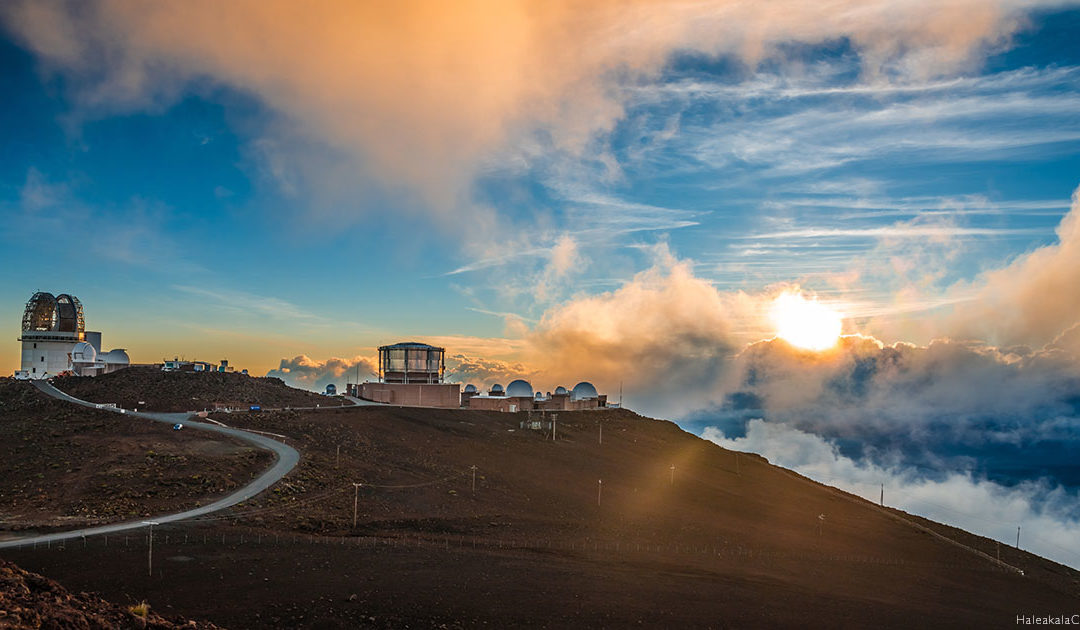
Haleakalā’s summit is a working science site, not just a sunrise spot. The newest research from Haleakalā National Park and the observatories above it covers a silversword population that’s dropped by about 60%, a nēnē comeback, the sharpest images of the Sun ever taken, and a volcano that isn’t as extinct as most visitors assume. Here’s what scientists have found recently, in plain numbers, and why some of it matters on your drive up.
Is Haleakalā Still an Active Volcano?
Technically, yes. The U.S. Geological Survey lists Haleakalā as active, with a “Moderate” threat rating. Its most recent eruption happened sometime between 1480 and 1600 CE, on the southwest rift near Mākena and La Pérouse Bay, and the volcano has erupted at least 10 times in the past 1,000 years.
Nothing suggests an eruption is coming. But the “dormant crater” line on a lot of tour sites isn’t how geologists describe it. The summit sits at 10,023 feet (3,055 m), and the so-called crater is really an erosional valley later partly refilled by lava and cinder cones.
The Silversword Is Losing Ground
The ʻāhinahina (Haleakalā silversword) grows nowhere else on Earth. It nearly disappeared in the early 1900s from grazing goats and souvenir collecting, then recovered for decades under park protection.

That recovery reversed.
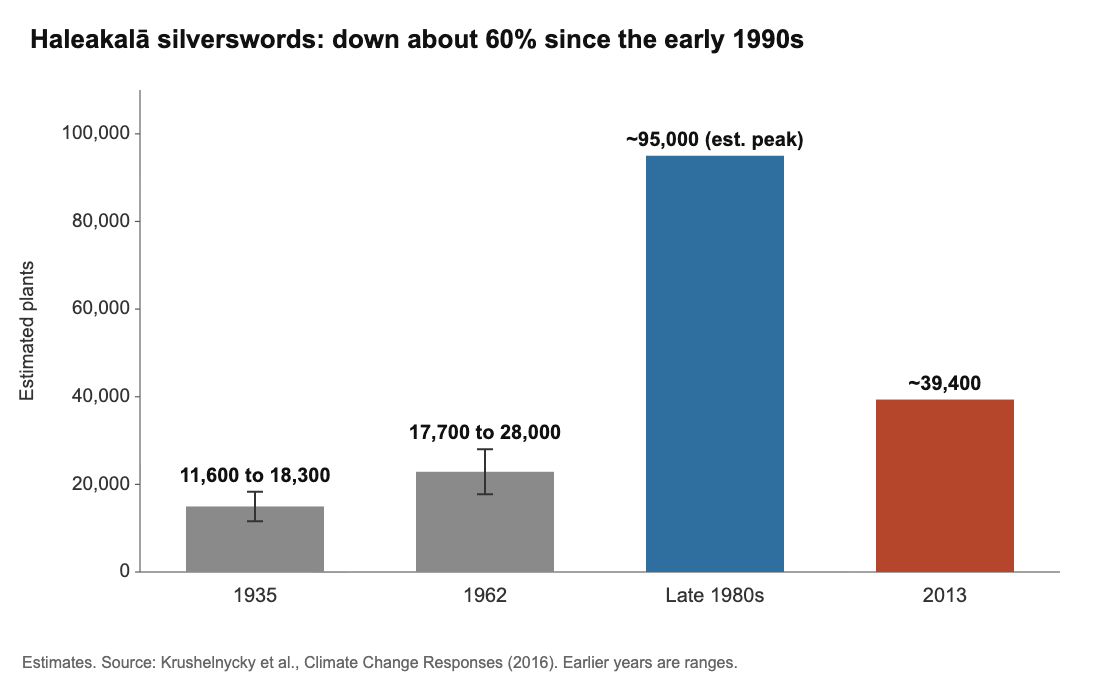
A 2016 study by park and university scientists estimated the population fell about 58% from 1991 to 2013, to roughly 39,400 plants. The cause they identified is climate, not visitors. Around 1990, the trade wind inversion (a warm, dry layer that caps clouds below the summit) started forming more often. Wet-season rainfall above about 6,200 feet (1,900 m) dropped by roughly 31%.
The outlook is mixed. A 2022 USGS-led study found the lower part of the silversword’s range faces a high chance of extinction within a century, while plants at the highest elevations look far more stable. A 2023 study in Scientific Reports found that about two-thirds of the current range is probably no longer suitable for replanting.
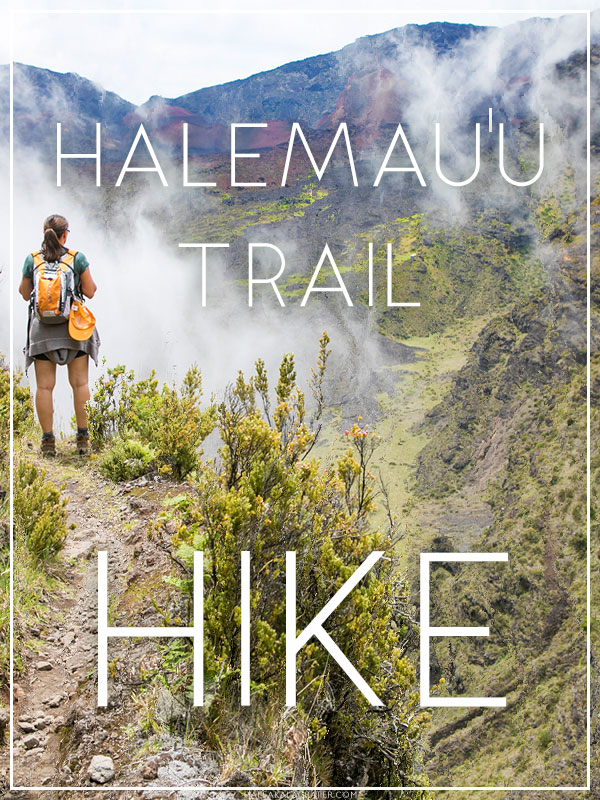
If you see silverswords near the Kalahaku overlook or along Sliding Sands Trail, stay on the trail. Their shallow roots get damaged by footsteps nearby, and disturbing the plants is illegal.
Nēnē: A Rare Good-News Story
In the 1950s, fewer than 30 nēnē were left in the wild. Captive breeding, plus about 500 birds released inside the park from 1962 into the late 1970s, started the rebound.
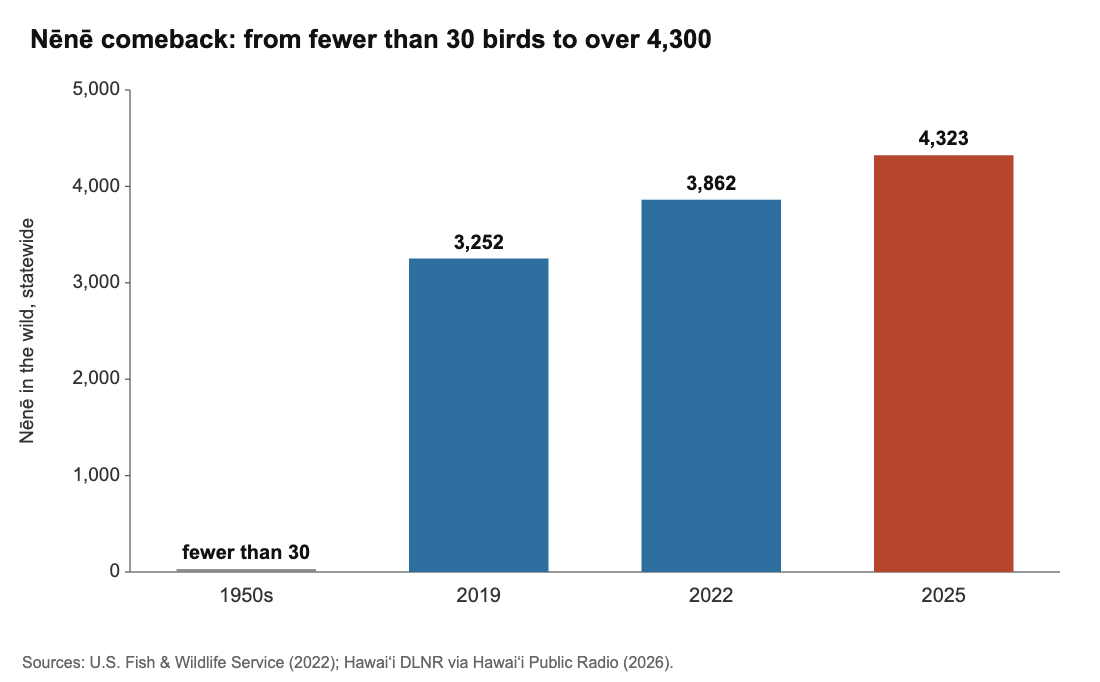
The statewide count reached about 4,323 birds in 2025, according to a state biologist interviewed by Hawaiʻi Public Radio. That’s up from 3,252 in 2019, though one federal release that year gave a lower number, so treat individual years as estimates.
The single biggest threat to nēnē in the park is cars. They walk on the summit road, especially near the visitor centers. Drive slowly and never feed them; fed birds learn to approach vehicles.
The Sharpest Look at the Sun, From Maui
The Daniel K. Inouye Solar Telescope sits in the summit observatory area, a short distance from the Puʻu ʻUlaʻula summit overlook. Its 13-foot (4 m) mirror makes it the largest solar telescope in the world.
Recent results from it:
- 2025: Researchers imaged loops in the Sun’s outer atmosphere averaging about 30 miles (48 km) wide during a solar flare, the finest such loops ever recorded.
- 2026: The telescope detected fast waves in the corona, cycling as often as once every 10 seconds, which may help explain why the Sun’s outer atmosphere is so much hotter than its surface.
- 2026: A paper in Nature confirmed swirling instabilities on the solar surface spaced about 31 to 40 miles (50 to 65 km) apart.
The observatory area is closed to the public. You’ll see the white domes from the summit parking lot, and that’s as close as visitors get.
Asteroid Hunting and Dark Skies
The Pan-STARRS telescopes on the summit find more than half of newly found near-Earth objects larger than about 460 feet (140 m), according to the University of Hawaiʻi Institute for Astronomy. Haleakalā also hosts one of NASA’s ATLAS survey telescopes.
That work depends on darkness, and the main threat is closer than you’d think. A 2018 study found that Kahului produced about 96% of the artificial light reaching the summit observatories. Switching streetlights to amber LEDs cut that sky glow to about a third. It’s one reason Maui County’s lighting rules matter more than they seem.
How Many People Visit Haleakalā?
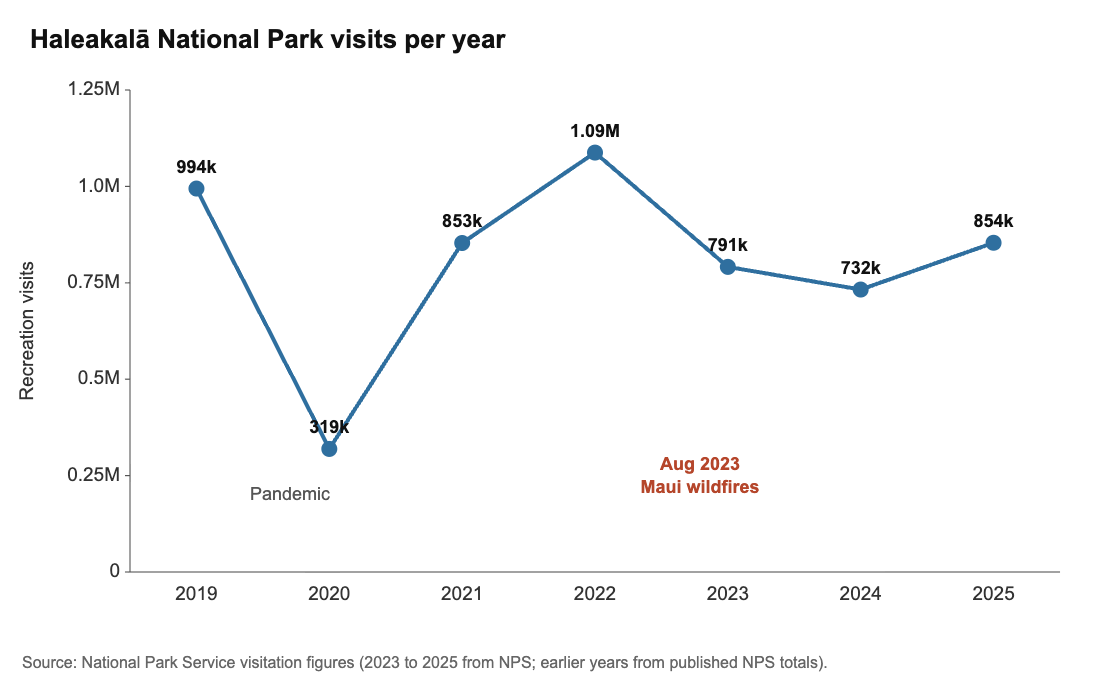
Visits topped 1 million in 2022, then dropped after the August 2023 Maui wildfires to 732,477 in 2024. In 2025 the park recorded 853,711 visits. The National Park Service estimates 2024 visitors spent about $56 million in nearby communities.
What This Means for Your Visit
Book sunrise early. Any car entering the summit district between 3:00 and 7:00 a.m. needs a $1 reservation from Recreation.gov, on top of the $30 vehicle entrance fee. Reservations open 60 days ahead at 7:00 a.m. HST, with a smaller batch released 2 days ahead, and nothing is sold at the gate.
Bring real layers. The summit is often near freezing before dawn, even in summer. Shorts and a hoodie won’t cut it.
Consider an afternoon trip instead. No reservation is needed after 7:00 a.m., and the overlooks are far less crowded than at sunrise. If you’d rather not drive, compare Haleakalā tours first.
Watch the road for nēnē and cyclists. The summit road climbs more than 10,000 feet (3,000 m) in under 40 miles (64 km), with switchbacks the whole way.
Haleakalā Science FAQ
When did Haleakalā last erupt?
Between 1480 and 1600 CE, according to USGS dating.
Are silverswords endangered?
The Haleakalā silversword is federally listed as threatened. Its numbers fell about 58% from 1991 to 2013.
Can you tour the Haleakalā observatories?
No. Science City is closed to the public.
How many nēnē are there now?
About 4,300 statewide as of 2025.
Sources
- Krushelnycky et al., Change in trade wind inversion frequency implicated in the decline of an alpine plant, Climate Change Responses (2016)
- Krushelnycky et al., Scientific Reports (2023)
- USGS, Haleakalā volcano
- NPS, Nēnē at Haleakalā
- AURA / NSF Inouye Solar Telescope, 2026 coronal waves
- Aubé, Wainscoat et al., MNRAS (2018)
- NPS, 2024 visitor spending